
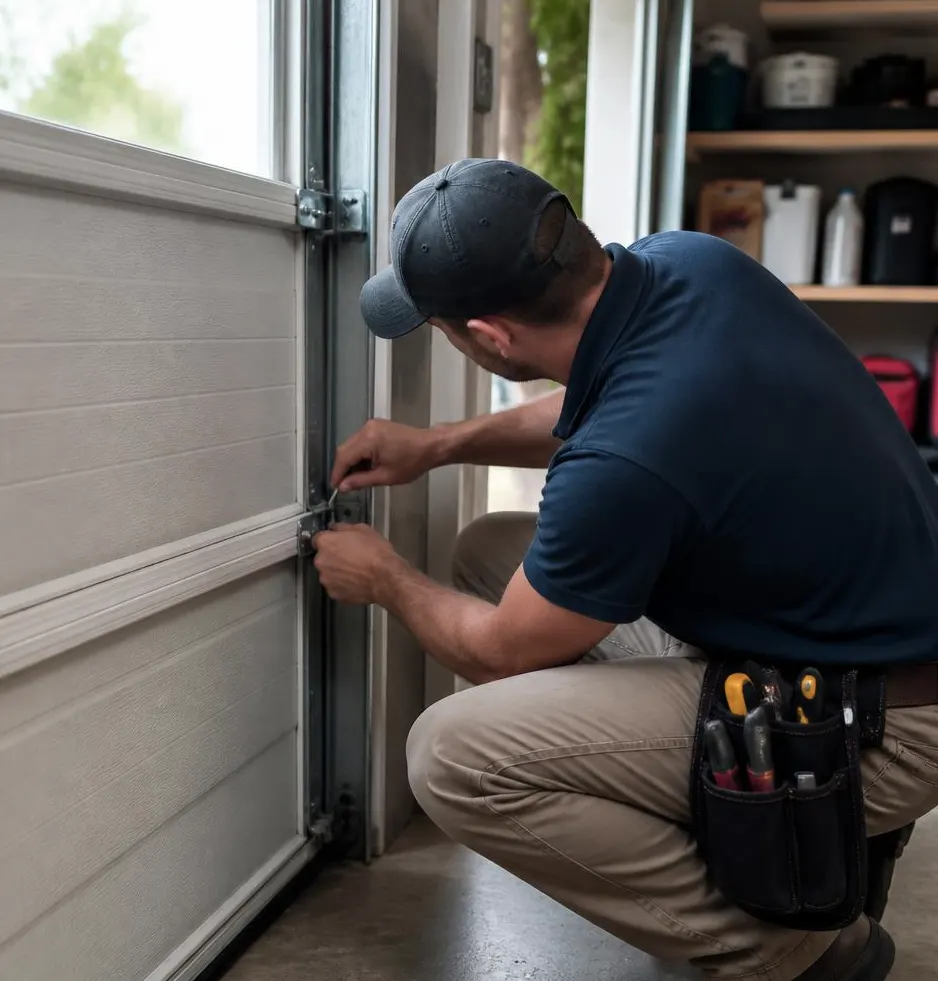
The short answer: lubricate the moving parts, check the weatherstripping, test the balance, and look over the springs and cables for rust damage left behind by hurricane season. Do that in the next few weeks and your door will run quietly and safely through the cooler, drier months ahead.
Winter in Polk County doesn't mean snow or ice, but it's a real shift from what your garage door just went through. After months of heat, humidity, and afternoon downpours, the air turns noticeably drier and nights get cooler, sometimes dipping into the 40s. That swing in temperature and humidity is exactly the kind of change that exposes problems a garage door has been quietly developing all summer.
Why Florida Winters Are Harder on Garage Doors Than They Look
Hurricane season leaves its mark even on homes that never took a direct hit. Months of high humidity, salt-tinged air if you're anywhere near the coast, and sudden downpours push moisture into metal hardware, wood paneling, and rubber seals. Rust doesn't always show up right away. It often surfaces weeks later, once the drier winter air starts pulling moisture out of everything, including the metal that was slowly corroding from the inside.
At the same time, the drop in humidity causes rubber and vinyl parts, like weatherstripping, to shrink and stiffen. Combine that with cooler nights and you get gaps, drafts, and sometimes a door that doesn't seal the way it did in August.
Inspect and Lubricate Every Moving Part
This is the single most useful thing you can do before winter sets in. Walk the track, hinges, rollers, and springs and look for:
- Surface rust or orange streaking on springs and cables
- Flaking or peeling paint on the track, which often hides rust underneath
- Rollers that look pitted, flat-sided, or cracked
- Hinges that are stiff or squeak when the door moves
If you see light surface rust, a wire brush and a silicone-based garage door lubricant (not WD-40, which attracts dust) can buy you time. If the rust has pitted the metal or you can see flaking on load-bearing parts like the springs or the lift cables, that's not a maintenance item anymore, it's a repair.
Check the Weatherstripping and Bottom Seal
Florida's dry season is tougher on rubber seals than most homeowners expect. The bottom seal and side weatherstripping that flexed easily in the summer heat can turn brittle and start pulling away from the door or frame once humidity drops. Signs it needs attention:
- Daylight visible around the edges of a closed door
- Cracking or splitting rubber along the bottom seal
- Leaves, dirt, or small pests getting into the garage
Cooler nights push rodents and insects toward warm, dry shelter, and a gap at the bottom of the garage door is an easy way in. Replacing a worn seal is inexpensive and straightforward, and it's worth doing before, not after, something moves in.
Test the Door's Balance
Temperature swings change how springs behave, and a door that was balanced correctly in July can feel slightly off in December. To check it yourself: disconnect the opener by pulling the release cord, then lift the door halfway by hand and let go. A properly balanced door will stay roughly in place. If it drifts down or shoots up, the spring tension has shifted.
An unbalanced door isn't just annoying, it puts extra strain on the opener motor and can wear out the trolley and gears faster than normal. Garage door springs operate under serious tension and are not a safe DIY adjustment. This is one of those checks that's fine to do yourself, but the fix belongs to a technician.
Don't Ignore the Opener and Sensors
Cooler mornings can be rough on older openers, especially battery backup units, which lose some capacity in colder temperatures. Test the backup battery now if your opener has one, rather than finding out it's dead during the next power outage. While you're at it, confirm the safety sensors near the bottom of the track are clean, aligned, and reversing the door properly when something blocks the path. Dust and pollen buildup over the humid months can throw sensors out of alignment without any obvious warning sign other than a door that occasionally refuses to close.
A Quick Word on What's Coming Next
Winter is also the easiest time to get ahead of next year's storm season. Rust caught now, worn rollers replaced now, and a properly balanced door going into spring all mean less scrambling when the first named storm shows up on the radar. Think of this seasonal check as the quiet half of storm prep, done while the weather is calm enough to actually get to it.
When to Call Alturas Garage Door
If you spot rust on the springs or cables, hear new grinding or popping sounds, or the door feels unbalanced when you test it by hand, it's time to call in a professional rather than keep adjusting things yourself. Alturas Garage Door handles garage door spring repair and garage door cable repair for homes across Alturas, Bartow, Lake Wales, and the rest of Polk County, and we can tell you quickly whether a part needs lubrication, replacement, or just a seasonal adjustment. We also handle full garage door maintenance visits if you'd rather have someone run through the whole system at once instead of chasing individual issues.
If your garage door has been acting up since the summer storms, don't wait for it to get worse over the winter. Call Alturas Garage Door today and get it looked at before the next cold snap rolls through.