
What Waiting Until the Next Storm Actually Costs
Every year, homeowners across Polk County put off garage door maintenance until a storm is already on the radar. By then, the hardware store shelves are picked over, technicians are booked solid, and the only option left is whatever can be jury-rigged in an afternoon. A door that fails during high wind doesn't just mean a dented panel. Once wind gets inside a garage, it pushes up on the roof from underneath, and that pressure has been responsible for roof and wall failures that cost far more than the door ever would have. Fixing a weak spring, a rusted track, or a sagging panel now, while the weather is calm, is cheaper and faster than replacing a door — or part of a roof — after it's already failed.
Why the Garage Door Fails Before the Rest of the House Does
Most exterior walls are solid, braced, and built to resist lateral pressure. A garage door is a large moving panel held in place by springs, tracks, rollers, and a handful of hinges. It's mechanically the least reinforced opening in the home, which is exactly why wind-load engineering exists for garage doors in storm-prone regions. When straight-line winds or a tropical system pushes against a home, the garage door takes the brunt of that pressure across its entire surface. If the hardware is worn, the tracks are bent, or the panels have already weakened from humidity and swelling, that's the point where the structure gives first.
Florida's climate makes this worse over time, not just during a single storm. Humidity swells wood and composite panels. Afternoon downpours followed by intense heat cause metal tracks and fasteners to expand and contract, loosening screws and bolts you can't see from the ground. Homes nearer the coast deal with salt air accelerating rust on springs, hinges, and rollers. None of this shows up as a dramatic failure day to day — it shows up as a slow loss of structural margin that only becomes obvious when wind actually tests it.
Signs Your Door Won't Hold Up to the Next Storm
- Visible rust on springs, hinges, or track brackets — rust weakens metal and makes sudden spring failure more likely under load.
- Panels that look slightly warped or don't sit flush — moisture swelling changes the shape of the door just enough to create gaps wind can exploit.
- Tracks that are bent, loose, or pulling away from the wall — even a minor misalignment can let the door jump the track under pressure.
- Rollers that are cracked, worn, or noisy — they're a cheap part that causes an expensive failure when they give out mid-storm.
- A door that feels heavier or lighter than it used to when opened manually — this usually means spring tension has shifted and the door is no longer properly balanced.
- Weatherstripping that's cracked, flattened, or pulling loose — this is your first line of defense against wind-driven rain, and it degrades faster in humid climates than most people expect.
Storm-Readiness Steps to Take Now
- Inspect and tighten all hardware. Track brackets, hinges, and roller brackets loosen gradually from temperature swings. A socket wrench and twenty minutes can catch most of this before it becomes a failure point.
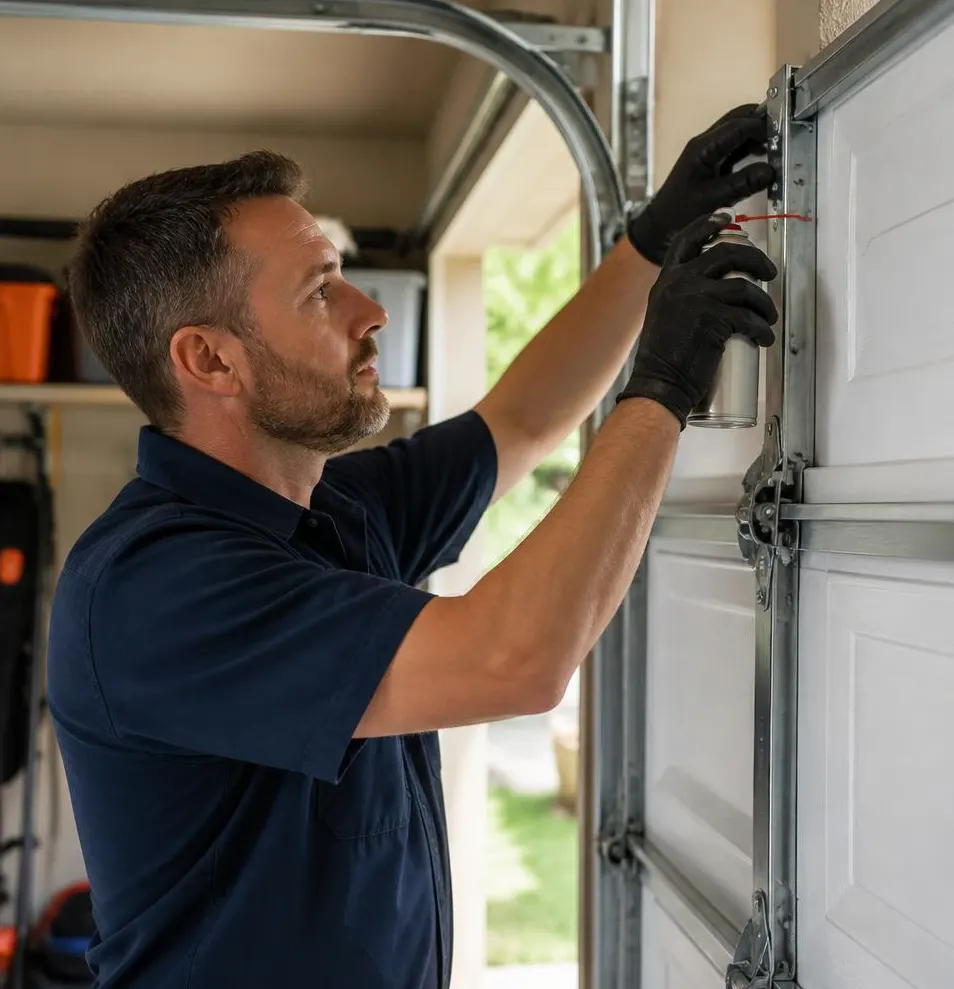
- Lubricate moving parts. Springs, rollers, and hinges should be lubricated with a silicone-based spray, not WD-40, which attracts dust and grit in humid conditions.
- Check the balance. Disconnect the opener, lift the door halfway by hand, and let go. It should stay in place. If it drifts up or falls, the springs need adjustment — this isn't a DIY spring job, since garage door springs are under high tension.
- Replace worn weatherstripping. This keeps wind-driven rain out and adds a layer of resistance against air infiltration during storms.
- Consider a wind-rated reinforcement kit. Horizontal bracing kits for existing doors typically run in the $200–$500 range and add significant resistance to wind pressure without replacing the whole door.
- Test the auto-reverse safety feature on the opener. Storms often bring power surges and electrical issues; a functioning auto-reverse also tells you the opener's sensors and motor are in good working order going into storm season.
- Clear gutters and drainage near the garage slab. Afternoon downpours that pool against the base of the door accelerate rust and can push water under the threshold during heavier storms.
DIY vs. Professional: Where the Trade-off Actually Matters
Tightening hardware, lubricating parts, and swapping weatherstripping are reasonable DIY tasks for most homeowners. Spring adjustment, track realignment, and cable work are not — these components are under enough tension to cause serious injury if handled without the right tools and experience. Professional spring or cable adjustments typically cost in the $50–$150 range as part of a maintenance visit, which is a small trade-off compared to the cost of a door replacement or emergency repair after a storm has already done damage.
When to Call Alturas Garage Door
If your door is unbalanced, the tracks look bent, or you're hearing new noises when it opens and closes, that's the point to call in a professional rather than keep adjusting things yourself. Alturas Garage Door handles full Garage Door Maintenance visits that cover spring tension, hardware, rollers, and weatherstripping in one appointment, and we also handle Off Track Door Repair when a door has already shifted out of alignment. Catching these issues in October, before the next system moves through, means less risk and less cost than an emergency call once the wind is already up.
Serving Alturas, Bartow, Lake Wales, Mulberry, Fort Meade, Frostproof, Winter Haven, and Lakeland — call Alturas Garage Door today to get your door storm-ready before the next system rolls through Polk County.